At the Edge of the World — My Journey Through Papua New Guinea
Published on: 8/29/2026
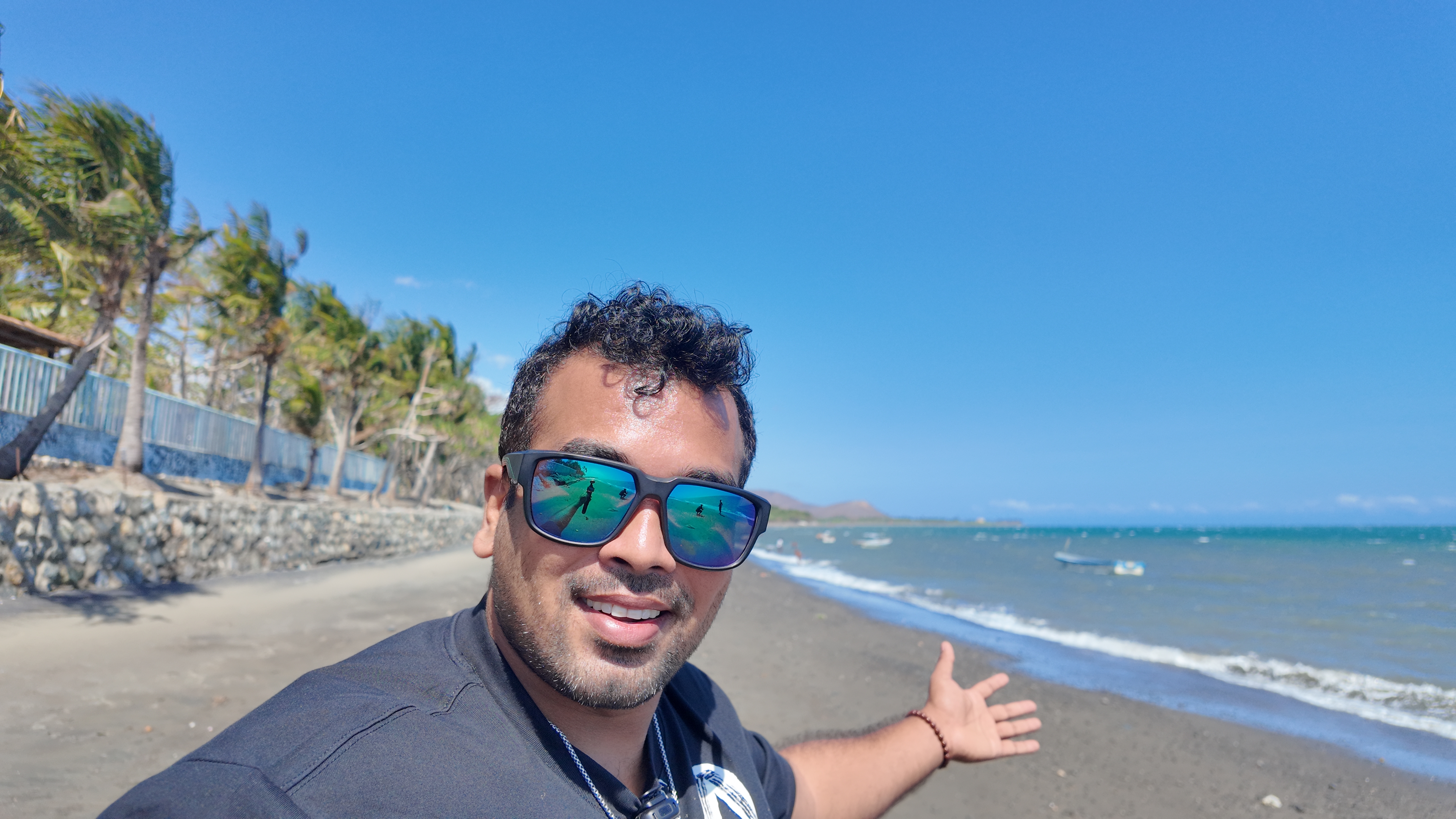
Dhaka was still awake when my journey began.
Perhaps this city never truly sleeps. Someone is always returning home, while someone else is leaving. Some people arrive at the airport to reunite with those they love. Others, like me, arrive in search of a world they have never seen before.
That night, I was leaving Bangladesh.
My destination was Papua New Guinea.
Whenever I mentioned the name, I noticed the same question in people's eyes:
“Papua New Guinea? Why would you go there?”
I had heard many stories.
Some described it as dangerous. Others spoke about remote tribes, mysterious traditions, deep jungles and communities that had lived beyond the reach of the modern world for generations.
And then there were the darker stories—the old tales of cannibalism, tribal conflicts and strange diseases hidden deep in the mountains.
I had heard them all.
But I have learned something from travelling:
**The country people describe to you and the country you discover with your own eyes are rarely the same place.**
So I wanted to see it for myself.
## From Dhaka to Guangzhou
My journey began in Dhaka and took me through Guangzhou, China.
As the aircraft climbed above Bangladesh, the lights of Dhaka slowly disappeared beneath the clouds.
Everything familiar became smaller.
My city.
My language.
My people.
My country.
At Guangzhou Airport, while waiting for my connecting flight, I looked at the map and realised how far I was travelling from home.
Then came another flight, carrying me farther south, toward the Pacific.
Hours later, I looked through the aircraft window and saw Papua New Guinea for the first time.
Green.
Endlessly green.
Mountains, forests, ocean and tiny human settlements scattered between them.
For a moment, it felt as though the modern world had arrived here, looked around, and decided to leave part of the land untouched.
It was beautiful.
Wild, unfamiliar and beautiful.
## Finding Bangladesh Thousands of Kilometres Away
But one of my greatest surprises in Papua New Guinea was not a mountain, a beach or a jungle.
It was people.
Especially the Bangladeshis living there.
There is a strange emotion that comes with meeting someone from your own country thousands of kilometres away from home.
They welcomed me warmly.
They invited me into their homes.
They fed me.
They gave me their time.
They helped me understand the country.
Sitting inside a Bangladeshi home on the other side of the world, surrounded by familiar conversations and the smell of familiar food, I realised something:
**A country does not exist only inside its borders. Sometimes, a country lives inside its people.**
When one Bangladeshi offers another a meal thousands of kilometres from home, for a brief moment that dining table becomes a little piece of Bangladesh.
## Then I Left the City Behind
I had not travelled all this way simply to see buildings, hotels and beautiful roads.
I wanted to understand how ordinary people lived.
So I went closer.
I travelled into their communities.
I walked through their villages.
I entered their homes.
I sat in their yards.
I watched them prepare food and ate with them.
Some dishes were completely unfamiliar to me. Sometimes I was surprised by what they ate and how they cooked it.
But something else became clear.
A kitchen in Bangladesh and a kitchen in Papua New Guinea may look completely different.
Yet the love with which a family prepares food for its children feels exactly the same.
The deeper I travelled, the less important our labels seemed.
Bangladeshi.
Papua New Guinean.
Asian.
Melanesian.
Inside an ordinary family home, those words suddenly felt small.
A mother worries about her children.
A father thinks about his family's future.
Children want to play.
Young people dream of a better tomorrow.
Perhaps human dreams do not need translation.
## Inside Their Schools
I also wanted to understand how children here were being educated.
So I visited their schools.
I watched the classrooms, teachers and playgrounds. I watched children learning, laughing, running and playing with their friends.
And once again, Papua New Guinea stopped feeling so distant.
A child's curiosity looks remarkably similar everywhere.
Dhaka.
Bhairab.
Port Moresby.
A remote village in Papua New Guinea.
They may speak different languages and grow up in completely different environments, but their eyes carry the same curiosity about tomorrow.
Some may dream of becoming teachers.
Some may want to become doctors.
Some are still too young to know what they want from life.
But when children run across a playground laughing together, the boundaries between rich and poor countries seem meaningless for a moment.
A child is smiling.
**That smile carries no passport.**
## Paradise Has Another Side
Papua New Guinea is beautiful.
Extraordinarily beautiful.
But telling only the beautiful side of the country would be unfair.
Behind the mountains, forests and blue water, there are also difficult realities.
Access to reliable, safe water remains a challenge in some communities.
Things many of us take for granted can become part of someone's daily struggle.
At home, we turn on a tap.
Somewhere else in the world, a person may be carrying a container and walking to collect the water their family needs.
It made me wonder:
How should we really measure civilisation?
By the height of our buildings?
By the number of highways we construct?
Or by how easily the poorest person in society can obtain something as basic as a glass of clean water?
## Then I Discovered a Dark Chapter of History
There is another story connected to Papua New Guinea.
A story that still sounds almost unbelievable.
But it needs to be told carefully.
Papua New Guinea was never simply a “country of cannibals.” It is home to hundreds of distinct communities, languages and cultural traditions.
However, historically, certain isolated groups did practise forms of cannibalism for cultural or ritual reasons.
One of the most extraordinary stories involves the Fore people.
Among them, there was once a mortuary tradition in which parts of deceased relatives were consumed.
To outsiders, it sounds horrifying.
But within that society, it was connected to death, mourning and cultural belief.
Then something terrible began to happen.
People became sick.
Their bodies began to tremble.
They gradually lost control of their movements.
Walking became difficult.
The illness progressed relentlessly and ultimately became fatal.
The disease became known as **kuru**.
Scientists eventually discovered that this was not an ordinary bacterial or viral infection.
The disease was associated with abnormal infectious proteins known as **prions**.
Consumption of infected human nervous-system tissue had helped transmit the disease.
Think about that for a moment.
A mysterious illness affecting people in the remote highlands of Papua New Guinea eventually became part of an important scientific story about how certain devastating brain diseases work.
What initially sounds like a frightening story about cannibalism becomes, when examined more deeply, a complicated story about culture, death, belief and science.
## It Is Easy to Judge a Country From Far Away
Before arriving in Papua New Guinea, my mind was filled with stories.
Some were frightening.
Some were fascinating.
Some were probably exaggerated.
But those stories began to change when I started sitting with people.
Because a headline shows you an event.
Entering someone's home allows you to see the human being behind it.
The person showing me his village had a family.
The person putting food in front of me knew that I was a stranger who might leave in a few days and perhaps never return.
Yet he shared what he had with me.
Why?
Perhaps some questions cannot be answered through economics or politics.
Perhaps their answers exist simply in human kindness.
## Food Became a Language
One of the most beautiful things about travelling is discovering that food does more than satisfy hunger.
Food tells history.
What people grow, what they hunt, how they cook, what grows in their environment and how families gather together—all of it is hidden inside a meal.
I ate their food.
Sometimes I was surprised.
Sometimes I hesitated.
Sometimes a flavour felt unexpectedly familiar.
But what I remember most is not necessarily what was on the plate.
I remember the people sitting around it.
Sharing food has a strange ability to make strangers feel familiar.
Around a meal, the camera becomes less important.
Nationality becomes less important.
And stories begin to flow.
## One Country, Hundreds of Worlds
Papua New Guinea cannot be understood as a single culture.
It is one of the most linguistically and culturally diverse places on Earth.
Travel from one community to another and the language, customs, clothing and way of life can change dramatically.
That diversity fascinated me.
On a world map, we draw a border around the land and write:
**Papua New Guinea.**
But inside that border are hundreds of smaller worlds.
There is the world of the modern city.
The world of the ocean.
The world of the mountains.
The world of the rainforest.
And then there are villages where, when darkness falls, the night becomes so deep and quiet that you wonder whether it looked exactly the same a thousand years ago.
## Eventually, I Had to Leave
Travel has one cruel rule.
No matter how beautiful a place is, eventually you have to pack your bag.
People who were complete strangers only days earlier can become the very people who make leaving difficult.
That was how I felt when it was time to leave Papua New Guinea.
I realised that I had arrived hoping to discover a country.
I was leaving with the stories of its people.
I arrived looking for mysteries.
I left with some answers—and even more questions.
I came carrying cameras, hoping to record what I saw.
But some moments were never really recorded by my cameras.
They were recorded somewhere inside me.
The hospitality of Bangladeshis far from home.
The yards of local families.
The village roads.
The laughter of schoolchildren.
The unfamiliar food.
The struggle for water.
The silence of the mountains.
And the extraordinary history of a society whose ancient traditions became connected to the discovery of kuru and the science of prion disease.
## What Papua New Guinea Left With Me
A country should never be judged only by the darkest chapters of its history.
Nor can we understand it merely by photographing its most beautiful beaches and mountains.
A country is ultimately its people.
Their laughter.
Their struggles.
Their beliefs.
Their mistakes.
Their history.
And the dreams they carry for their children.
In Papua New Guinea, I saw ancient traditions standing beside the modern world.
I saw beauty beside hardship.
I saw isolation beside ambition.
I saw the shadows of the past and the hopes of a new generation.
But above everything else, I saw people.
I had travelled thousands of kilometres from Dhaka to meet people who, from a distance, seemed completely different from me.
And somewhere along the journey, I discovered something simple.
Perhaps we are not so different after all.
Languages change.
Skin colours change.
Food changes.
Homes change.
Flags change.
But when a stranger welcomes you into his home, shares his food with you and begins telling you the story of his life, the enormous world on the map suddenly becomes very small.
And perhaps the shortest distance on Earth is not between two countries.
**It is the distance between one human being and another.**
Papua New Guinea gave me more than a journey.
It gave me stories.
Some journeys end when the plane takes off for home.
Others never really end.
**The traveller returns.**
**The story remains.**